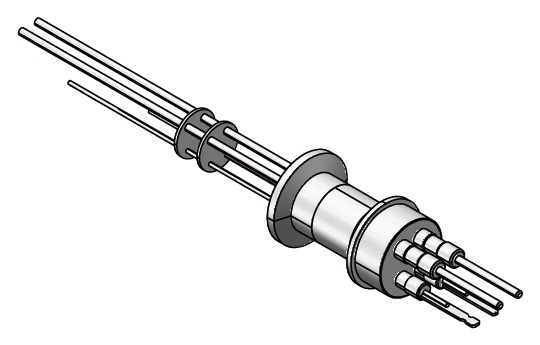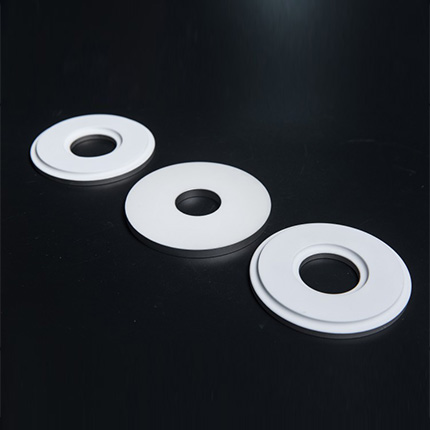
Ceramic-to-metal sealing is the foundation of every reliable vacuum feedthrough, viewport and ceramic break. It is the technology that lets a high-voltage conductor pass through a UHV chamber wall without leaking a single molecule of gas — at pressures below 1×10⁻¹⁰ mbar·l/s. Understanding how these seals are made helps engineers specify components correctly and avoid costly field failures.
Why Ceramic?
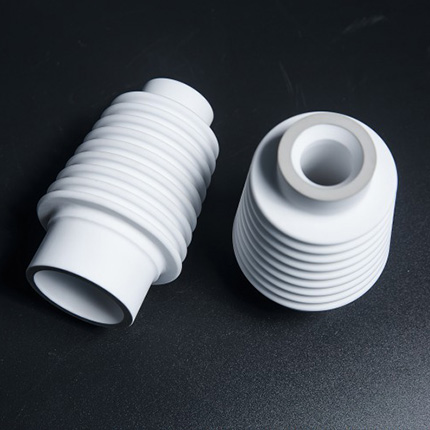
Alumina (Al₂O₃) is the workhorse of vacuum sealing. It combines extremely high electrical resistivity (over 10¹⁵ Ω·cm), excellent dielectric strength (above 40 kV/mm), mechanical hardness, and the ability to withstand bakeout temperatures of 400 °C and beyond. Compared with glass seals, ceramic-metal seals handle much higher voltages, larger currents and harsher thermal cycling.
The Metallization Step
Before a ceramic can be brazed to metal, its surface must be metallized — coated with a thin metal layer that the braze alloy can wet. The most common routes are:
- Molybdenum-Manganese (Mo-Mn) process: the classic thick-film method. A Mo-Mn slurry is printed onto the ceramic, then fired in a wet hydrogen furnace. The manganese migrates into the ceramic grain boundaries, creating a strong mechanical anchor.
- Thin-film / sputtered process: Mo, W or Ti layers are deposited by sputtering or evaporation, often followed by nickel plating. This suits fine-pitch patterns and high-purity surfaces.
- Active metal brazing (AMB): a braze alloy containing titanium is applied directly to the un-metallized ceramic. Titanium reacts with the ceramic surface to form a wetting layer. This is common for AlN and other non-oxide ceramics.
The quality of this metallized layer determines the ultimate vacuum integrity of the seal. At HermiCore we validate metallization with helium leak testing down to 1×10⁻¹¹ Pa·m³/s and inspect the layer structure with SEM at 4000× magnification.
Brazing: Matching Thermal Expansion
The braze alloy (typically Ag-Cu eutectic, sometimes Cu or Au-based for higher service temperatures) melts at roughly 780–900 °C and wets both the metallized ceramic and the metal part. The critical engineering challenge is coefficient of thermal expansion (CTE) matching: alumina expands at about 7–8×10⁻⁶ /K, while stainless steel expands at roughly 16–18×10⁻⁶ /K. Direct brazing would crack the ceramic on cool-down.
That is why manufacturers use CTE-compensating intermediates:
- Kovar (FeNiCo 29%): CTE closely matched to alumina over a wide temperature range — the classic choice.
- Copper / molybdenum / tungsten composites: copper conducts heat and current; moly and tungsten expand slowly and stiffen the joint.
- Ductile metal interlayers and stress-relief geometry: flexible bellows, thin-wall sections and graded seals absorb residual stress.
Design Rules That Make or Break a Seal
- Keep the ceramic-to-metal joint away from high bending loads; vacuum pressure on a large viewport can reach 1 kg/cm² — design flanges and windows with adequate thickness.
- Prefer compression-style seals where the metal is designed to squeeze the ceramic slightly, increasing joint strength.
- Control brazing atmosphere and time; hydrogen atmosphere brazing prevents oxidation and improves wetting.
- Always specify the leak rate class you need. UHV applications require < 1×10⁻¹⁰ mbar·l/s verified by helium mass spectrometry on 100% of parts.
Choosing a Partner
A reliable ceramic-to-metal seal supplier should control the entire chain — ceramic sintering, precision machining, metallization, brazing and leak testing — in-house. This avoids the "finger-pointing" that occurs when each process is outsourced. Ask about their furnace capability, material traceability and how they handle non-standard geometries.
If you are designing a new vacuum system, our engineers are happy to review your interface drawings and recommend the right seal configuration — from standard power feedthroughs to fully custom brazed assemblies.